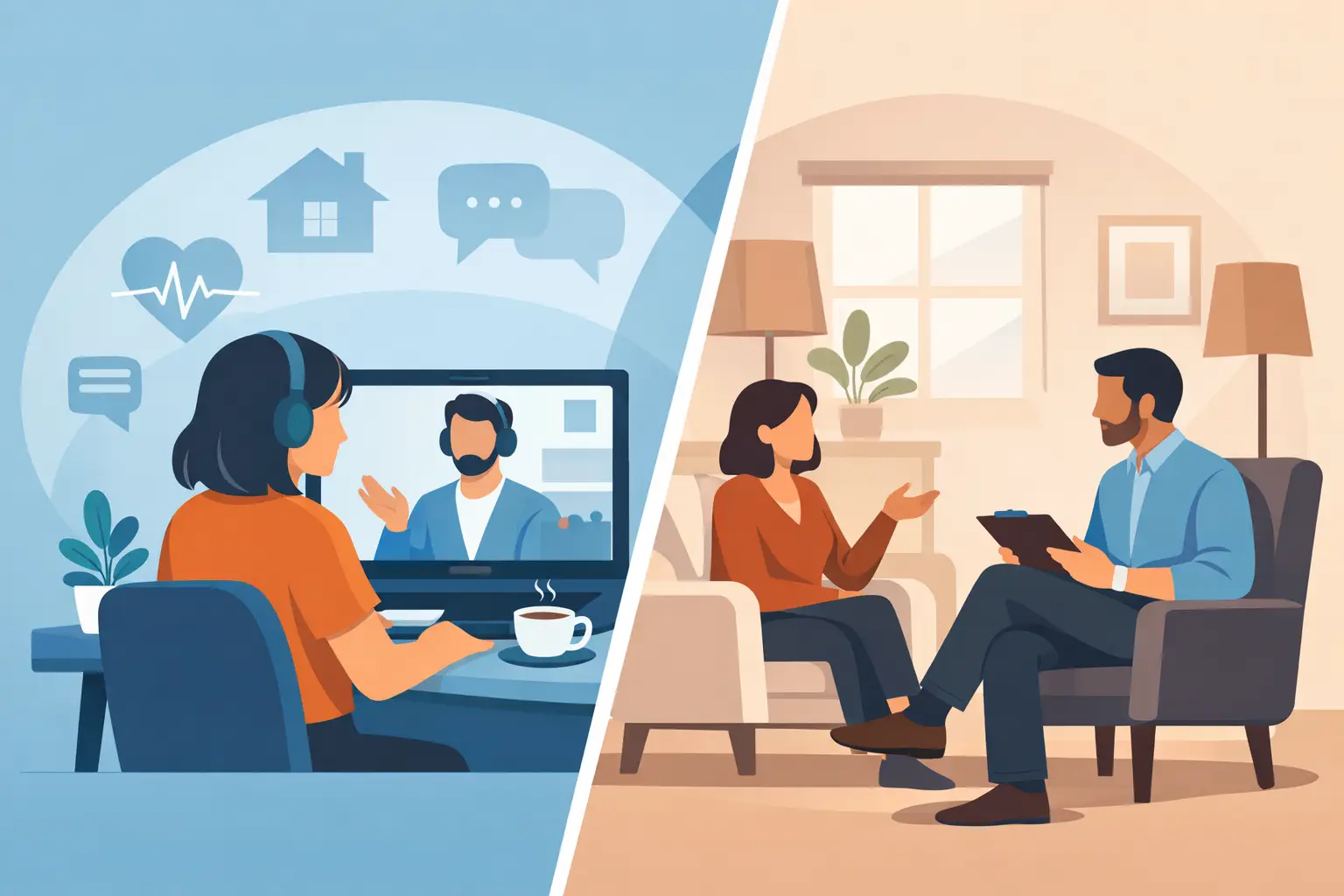
A therapy appointment should fit into your life without adding unnecessary stress. For some people, that means speaking with a psychologist from a quiet room at home. For others, it means sitting across from a clinician in a private, dedicated space. When considering telehealth vs in-person therapy, the best choice is usually the format that helps you feel safe, engaged and able to attend consistently.
Neither option is automatically better. Telehealth and face-to-face therapy can both provide meaningful support for concerns such as anxiety, low mood, relationship difficulties, behavioural concerns, parenting stress and disability-related goals. The right format depends on your needs, your environment and the type of support you are receiving.
Telehealth vs in-person therapy: the key difference
Telehealth therapy is delivered by secure video or phone, allowing you to speak with your clinician without travelling to a clinic. In-person therapy takes place face-to-face in a professional setting. Both formats involve the same core therapeutic work: discussing what is happening, identifying goals, learning practical strategies and reviewing progress over time.
The difference is not simply where you sit during the appointment. It can affect privacy, communication, access to support and how comfortable you feel opening up. A person who feels calmer and more candid at home may benefit greatly from telehealth. Someone who finds home distracting, crowded or emotionally difficult may get more from attending a clinic.
When telehealth may be a good fit
Telehealth can make professional support more accessible for people with busy schedules, mobility limitations, transport barriers or caring responsibilities. It may also be useful for Brisbane clients who live further from their preferred provider, have work commitments, or find travel and waiting rooms overwhelming.
For many people, the practical benefit is consistency. If an appointment can happen during a lunch break, while a baby sleeps, or without arranging a long trip across town, it may be easier to maintain regular care. Consistent attendance matters because therapy often works through small, repeated steps rather than one conversation alone.
Telehealth can also be particularly helpful when a client is managing fatigue, chronic health concerns or periods of reduced capacity. A phone appointment may be more manageable than cancelling altogether. For NDIS participants, telehealth can support ongoing contact with clinicians when travel, support-worker availability or changing routines would otherwise interrupt services.
However, telehealth works best when you have a reasonably private place to talk, a reliable internet connection for video sessions, and enough time to settle into the appointment. You do not need a perfect home office, but it helps to have a quiet room, headphones where appropriate, and a plan to reduce interruptions.
The privacy question at home
Privacy is one of the most important factors to consider. If you share a home with family, housemates or children, it can be difficult to speak freely about sensitive issues. Some clients use a parked car, a private room at work or headphones in a quiet area of their home. These arrangements can work, provided the space is safe and confidential.
If you are concerned someone may overhear you, or if your home environment is part of the issue you need to discuss, face-to-face appointments may offer a more secure setting. Therapy is most useful when you do not have to edit yourself to protect someone else’s feelings or avoid being heard.
When in-person therapy may be more suitable
Face-to-face therapy gives you a dedicated space away from everyday demands. Walking into a clinic can create a helpful boundary: this is time set aside for your wellbeing, relationships or support goals. For some clients, that separation makes it easier to focus and to leave the session with a clearer mind.
In-person appointments may be especially helpful for people who value non-verbal communication, find video calls tiring, or struggle to connect through a screen. Your clinician can still listen carefully during telehealth, but some people feel more understood when they can share the room, notice body language and have fewer technical distractions.
For children and families, face-to-face sessions can provide opportunities for play-based activities, observation and practical coaching that may be more difficult to deliver online. The same can apply to some behavioural support needs, where seeing routines, interactions and communication patterns in context is valuable. The most appropriate approach will depend on the child’s age, developmental needs and the goals of the family.
In-person care can also be a better option when distress is intense, communication is complex, or a person needs more hands-on structure during appointments. This does not mean telehealth is ineffective in these circumstances. It means the clinician and client should make a considered decision about what will provide the safest and most useful level of support.
Your therapy goals should guide the format
The format should support the work you want to do. For individual counselling, either telehealth or in-person sessions may suit concerns such as stress, grief, anxiety, self-esteem or life transitions. What matters most is whether you can engage honestly and put strategies into practice between sessions.
For relationship therapy, telehealth can be convenient when partners are in different locations or have competing work and family commitments. In-person sessions may be preferable if both people find it easier to stay present in a shared room. If conflict at home makes it difficult to speak openly, a clinic appointment can provide helpful neutral ground.
For Positive Behaviour Support and NDIS-aligned services, delivery may involve a combination of approaches. Telehealth can support planning meetings, parent or carer consultations and progress reviews. Face-to-face sessions may be useful for assessments, direct support, observations or collaborative work with families and support teams. Funding arrangements and the supports included in your plan should be discussed directly with your provider and plan manager where relevant.
A blended approach can offer the best of both
You do not have to choose one format forever. Many clients use a blended arrangement, attending in person when beginning therapy or addressing a more complex concern, then using telehealth for follow-up sessions when it suits their routine. Others prefer regular in-person appointments but use phone or video sessions when illness, weather, transport or caring demands make travel difficult.
A flexible approach can protect continuity of care. Missing one session is sometimes unavoidable, but having a telehealth option may make it easier to stay connected during a demanding period. Your clinician can help you decide whether a temporary or ongoing change in format makes sense.
Questions to ask before booking
Rather than asking which option is generally more effective, ask which option will help you attend and participate. Consider whether you can speak privately at home, how far you would need to travel, whether screens make you feel connected or drained, and what your goals require.
It is also worth thinking about who else may need to be involved. Parents, carers, partners and support workers can sometimes contribute useful information or participate in parts of a session with consent. Telehealth can make this easier when people are in different locations, while in-person appointments may be more practical when coordinated support or observation is needed.
You can change your mind after starting. Therapy is a collaborative process, and the appointment format should be reviewed if it is getting in the way of your progress. A professional provider will discuss your preferences, clinical needs and practical circumstances without pressure.
Choosing support that feels possible
The most effective therapy is often the therapy you can access consistently and engage with openly. Whether that is through a screen, over the phone or in a clinic room, you deserve care that respects your circumstances and gives you room to focus on what matters.
At In Mind Therapy, telehealth, phone and face-to-face options can be considered alongside your therapeutic needs, family situation and NDIS goals. Taking the first step does not require having every detail worked out. It simply starts with choosing a format that makes support feel possible.