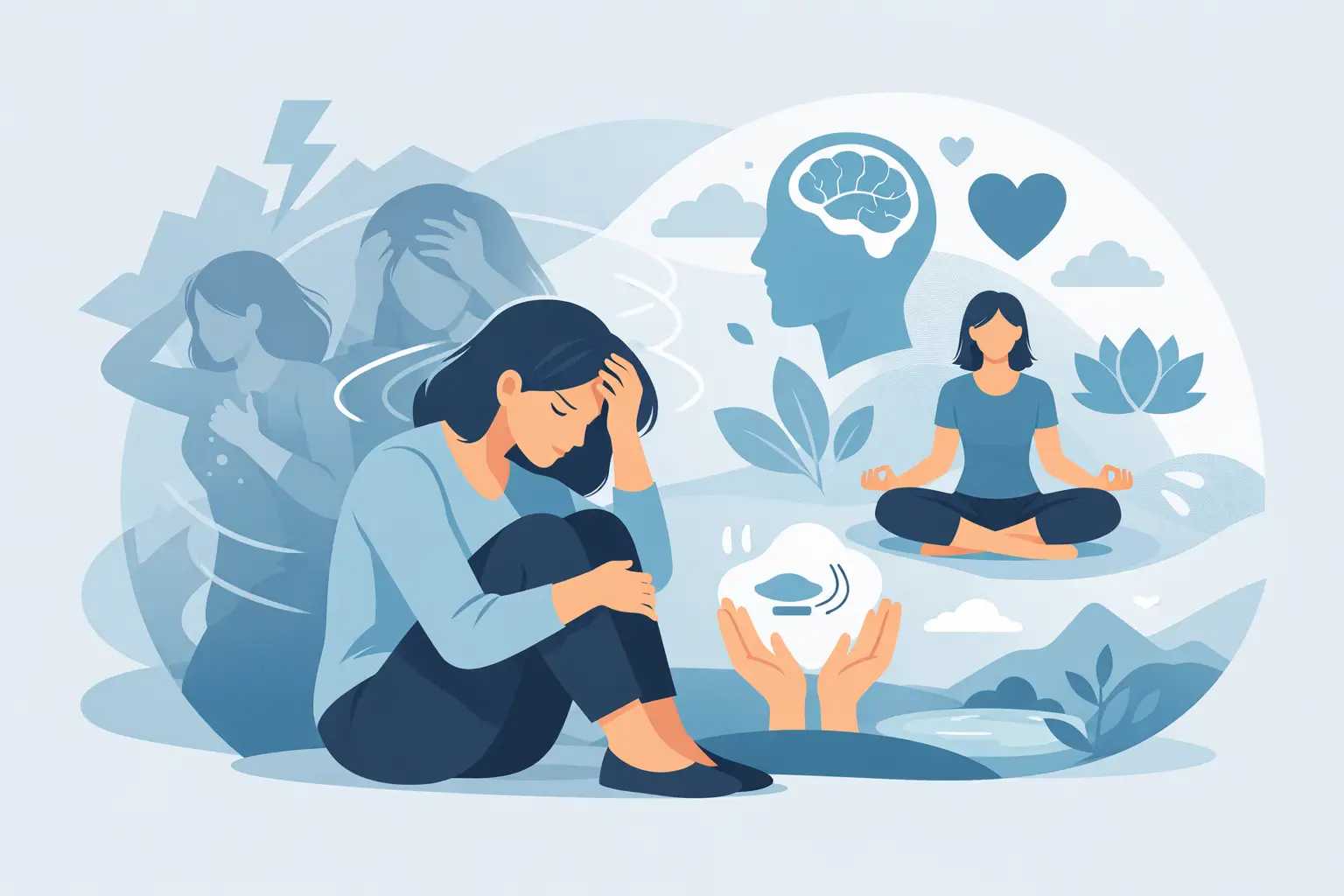
A panic attack can make an ordinary moment feel suddenly unsafe. You may be at work, in the car, at the shops or at home when your heart races, your chest feels tight and your thoughts begin to spiral. Learning how to manage panic attacks does not mean forcing yourself to feel calm immediately. It means having safe, practical responses that help your body and mind ride out the surge.
Panic attacks are intensely distressing, but they are time-limited. The physical sensations can feel alarming, particularly when they include shortness of breath, dizziness, shaking, nausea, sweating or a sense that something terrible is about to happen. A panic attack is not a sign of personal weakness. It is your nervous system sounding an alarm, even when there is no immediate danger.
Recognise what is happening
Naming the experience can reduce some of its power. If you have experienced panic before and recognise the pattern, try saying to yourself: “This feels frightening, but it is a panic attack. It will pass.” You do not have to fully believe the statement for it to be useful. The aim is to introduce a steadier message alongside the fearful one.
Panic symptoms can overlap with medical concerns, so avoid assuming every new or severe symptom is anxiety. Seek urgent medical help by calling 000 if you have severe or persistent chest pain, fainting, new weakness or numbness, difficulty breathing that does not settle, or you are worried you may be experiencing a medical emergency. It is reasonable to have new symptoms assessed by a GP or emergency clinician.
For many people, panic becomes more frightening because of the meaning attached to body sensations. A faster heartbeat may be interpreted as a heart problem, or light-headedness as a sign of losing control. This fear can intensify the body’s alarm response. Understanding this cycle is often one part of therapy for panic.
How to manage panic attacks in the moment
When panic is building, keep your response simple. Trying several techniques at once or demanding that the attack stop can add pressure. Choose one or two strategies that feel manageable and practise them when you are relatively calm, so they are more familiar when you need them.
- Slow your exhale. Rather than taking large, deep breaths, which can sometimes make light-headedness worse, allow your breathing to become gentle and unforced. Try breathing in comfortably, then breathing out a little more slowly. Count if it helps, but do not worry about getting the timing perfect.
- Orient yourself to the room. Look around and identify a few neutral details: the colour of a wall, the feel of your feet in your shoes, the temperature of a drink bottle, or sounds in the background. This helps bring attention away from frightening internal sensations and back to the present.
- Use a compassionate script. Remind yourself that panic is uncomfortable but temporary. You might repeat: “My body is alarmed. I can let this wave pass.” A calm, realistic phrase is generally more helpful than trying to argue with every anxious thought.
- Reduce immediate demands. If possible, sit somewhere safe, loosen tight clothing, sip water and give yourself permission to pause. You do not need to solve the cause of the panic attack while you are in the middle of it.
Some people find it helpful to stay where they are, especially if they usually leave situations quickly whenever panic begins. Leaving may bring short-term relief, but repeated avoidance can teach the brain that a place, activity or sensation was dangerous. That said, context matters. If you are driving, operating equipment or are somewhere genuinely unsafe, move to safety first.
After the panic has eased
It is common to feel exhausted, emotional or embarrassed after a panic attack. Try to respond as you would to any intense physical stress response: give yourself a little recovery time, eat or drink if needed, and return to your usual routine at a manageable pace.
Later, make a brief note of what was happening beforehand. Consider factors such as poor sleep, illness, pain, alcohol or other substances, caffeine, conflict, workload, hormonal changes, crowded environments or a particular worry. A trigger is not always obvious, and looking for one should not become another source of anxiety. The purpose is to notice patterns over time, not to blame yourself.
It can also help to notice what you did that supported you, even if the attack did not stop straight away. Perhaps you stayed in the room, slowed your breathing, called someone you trust or avoided searching symptoms online. These are meaningful steps. Building confidence after panic is usually gradual.
Reduce the fear of future panic attacks
The worry that another attack may happen can become as limiting as the attacks themselves. People may start avoiding public transport, meetings, exercise, queues, social events or being alone. Avoidance makes sense as an attempt to feel safe, but it can shrink daily life over time.
A more sustainable approach is to take small, planned steps back towards situations you have been avoiding. The right pace depends on your symptoms, health, responsibilities and available support. For example, someone who has begun avoiding supermarkets might first visit for five minutes with a support person, then gradually build up time and independence. The goal is not to prove that you will never feel anxious. It is to learn that you can cope with anxiety without having to escape it.
Regular routines can also lower your overall vulnerability to panic. Consistent sleep, regular meals, movement that suits your health, reduced caffeine where relevant and time to decompress can all make a difference. These changes are not a replacement for treatment, and they will not prevent every panic attack. They do create a steadier foundation for your nervous system.
When professional support can help
Consider speaking with a psychologist or counsellor if panic attacks are recurring, affecting work or study, limiting your relationships, disrupting sleep, or leading you to avoid places and activities that matter to you. Professional support can also be valuable after a first panic attack, particularly if you are unsure what happened or feel constantly on edge afterwards.
A clinician can help assess whether panic is occurring alongside general anxiety, trauma, depression, health concerns, grief, relationship stress or other challenges. Treatment may include learning about the panic cycle, developing personalised coping strategies, working with unhelpful predictions, and gradually reducing avoidance. The most appropriate approach depends on your circumstances and should be developed collaboratively.
For NDIS participants, anxiety and panic may interact with disability-related stress, sensory overload, communication needs, changes in routine or support coordination challenges. A therapy plan may need to account for these practical realities, rather than treating panic in isolation. Where funding and goals allow, allied health support can be tailored to the person’s needs, preferences and daily environment.
In Mind Therapy provides psychology and counselling support through face-to-face appointments, phone consultations and telehealth for people who need accessible mental health care in Brisbane. If panic is making your world feel smaller, reaching out for qualified support can be a practical next step.
Supporting someone during a panic attack
If a family member, friend or partner is having a panic attack, speak slowly and keep your language simple. Ask whether they would like you to stay nearby, help them move to a quieter space, or remind them to breathe gently. Avoid telling them to “calm down” or insisting there is nothing to worry about, as this can leave them feeling misunderstood.
You can offer reassurance without minimising the experience: “I can see this is really hard. I am here with you. We can take this one minute at a time.” If symptoms are new, unusually severe or suggest a medical emergency, seek urgent help rather than assuming it is panic.
Panic can be loud, physical and deeply unsettling, but it does not have to dictate every decision you make. With a clear plan, patient practice and the right support, it is possible to feel safer in your body and more able to return to the parts of life that matter to you.