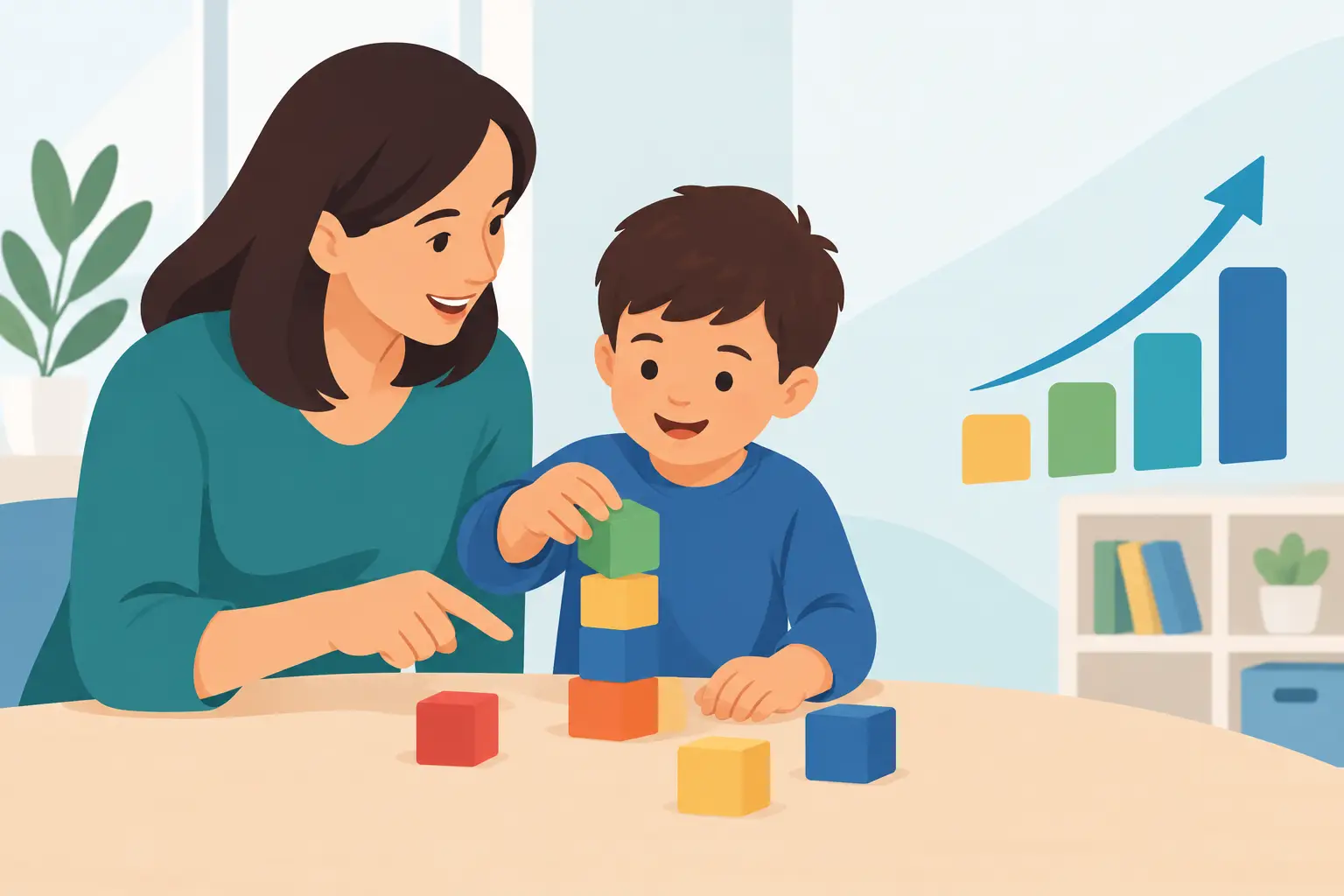
A child who used to become distressed at every transition may begin walking from the car to their early intervention session with a parent nearby. Another may start pointing to a preferred toy instead of crying when they want help. These are the kinds of early intervention progress examples that can look small from the outside, but can make everyday family life feel markedly more manageable.
Progress in early childhood intervention is rarely a straight line. Children learn at different rates, new skills may appear first in one setting and not another, and a difficult week does not erase what has already been achieved. Looking for meaningful progress means noticing practical changes in communication, participation, regulation, play and daily routines - not comparing a child with other children or focusing only on milestones.
What early intervention progress can look like
Early intervention supports young children with developmental delay, disability, communication differences, sensory needs, emotional regulation difficulties or challenges with everyday participation. The purpose is not to make a child fit a narrow idea of what development should look like. It is to build skills, confidence and support around the child and family so daily life works better.
A useful progress example is always connected to a real need. Rather than recording that a child has improved in a general sense, a family and clinician might identify that the child can now stay at the table for five minutes during a preferred meal, accept a nappy change with fewer signs of distress, or join a familiar play activity with a sibling.
The significance of a change depends on the child, their environment and the goal. Saying two new words may be a meaningful gain for one child. For another, progress may be using a picture, gesture or communication device to make a choice independently. Communication is about being understood and having a reliable way to connect, not just spoken language.
Communication and connection examples
Communication goals often focus on reducing frustration and helping a child express needs, choices and experiences. Early signs of progress might include looking towards a parent when their name is called, taking turns in a familiar game, copying an action, using a gesture to request help, or bringing an adult to something they want.
Over time, that may develop into using words, signs, pictures or a device to ask for a drink, say no, greet a familiar person or share an interest. A parent may notice fewer meltdowns at snack time because their child can show what they want. That is a meaningful functional outcome, even if speech remains limited.
Regulation and behaviour examples
When a child is overwhelmed, behaviour is often communication. Progress is not simply that challenging behaviour stops. It may mean the child has more support, more predictable routines and safer ways to communicate distress.
For example, a child who previously threw toys when a game ended may begin handing the toy to an adult with a visual cue. A child who ran from the bathroom during toothbrushing may tolerate the toothbrush touching their teeth for a few seconds, then gradually manage a more complete routine. Another may learn to move to a quiet space, squeeze a cushion or seek a trusted adult when noise becomes too much.
These gains usually depend on adults responding consistently as well. If a parent learns the early signs that their child is becoming overloaded and adjusts the routine before distress escalates, that is progress for the whole family.
Play, learning and participation examples
Play is a major way young children learn. A child may first play alone and repeat the same action, then begin to notice what another person is doing, copy a simple action or tolerate an adult joining their play for a short time. Later, they may take turns rolling a ball, participate in a song routine or try a new activity with support.
Participation goals can also relate to community life. A family may work towards their child staying in the pram during a short grocery shop, attending a playgroup for 15 minutes, or coping with a visit to grandparents. These goals should be realistic and adjusted to the child’s sensory, communication and emotional needs. For some children, attending for a short, positive period is more valuable than staying until the end while becoming highly distressed.
Daily living examples
Daily routines provide some of the clearest ways to see change. Progress may include lifting arms for a shirt, washing hands with verbal prompts, placing toys in a box at pack-up time, sitting on the toilet for a short period, or moving through the bedtime routine with less support.
Independence does not have to mean completing every step alone. A child may move from needing physical assistance to following a picture sequence, or from requiring several reminders to responding to one. These changes can reduce stress and give children a growing sense of capability.
How early intervention progress is measured
Good progress monitoring combines clinical observation with the expertise of parents and carers. Families see the routines, triggers and successes that occur outside appointments. Clinicians can help turn those observations into clear goals and practical strategies.
A goal should describe what the child will do, where it matters and what support is needed. For example: during morning routines, the child will use a picture or gesture to choose between two breakfast options on most days. This is easier to observe than a broad goal such as improving communication.
Progress may be measured through session notes, parent feedback, observation across settings, simple counts or checklists, and short videos where appropriate and consented to. In NDIS-funded supports, clear records also help demonstrate how therapy relates to functional capacity and the goals in a child’s plan.
Numbers can be helpful, but they are not the whole story. A child may use a new skill only once at first, yet that single attempt can show they are ready for the next step. Equally, a child may perform a skill in therapy but not at home, which signals a need to adapt the strategy, practise in a more familiar setting or provide additional support to carers.
Why progress is not always linear
Illness, poor sleep, childcare changes, family stress, sensory overload and developmental bursts can all affect how a child manages a skill from one day to the next. A child who communicates confidently at home may become quiet in an unfamiliar clinic room. Another may cope well with a routine until a change in schedule makes it harder.
This does not necessarily mean intervention is failing. It may mean the child needs more repetition, a smaller step, different communication supports or a change to the environment. Goals should be reviewed rather than treated as fixed targets that a child either passes or fails.
It is also worth separating a child’s capacity from their compliance. A child may be able to complete an activity but be too tired, anxious or overwhelmed to do it at that moment. Respectful early intervention considers the child’s wellbeing alongside skill development.
Making progress visible at home
Families do not need to document every moment. A brief note on a mobile, a weekly reflection or a few observations shared with the therapist can reveal useful patterns. You might notice what happened before a difficult transition, which words or visuals helped, or whether a new skill appeared with one parent but not another.
It helps to keep the focus on meaningful routines. If getting out the door has become less stressful, if your child can tell you they need a break, or if siblings can play together for two minutes more than before, those changes deserve to be recognised.
At In Mind Therapy, early childhood intervention can be tailored around the child’s needs, family priorities and available supports, including NDIS-aligned care where relevant. The right approach may involve direct work with a child, coaching for parents and carers, or collaboration with childcare and other providers.
The most helpful question is often not, "Are they caught up yet?" It is, "What is easier, safer, more connected or more possible for our child and family than it was before?" That is where meaningful progress begins to show itself.