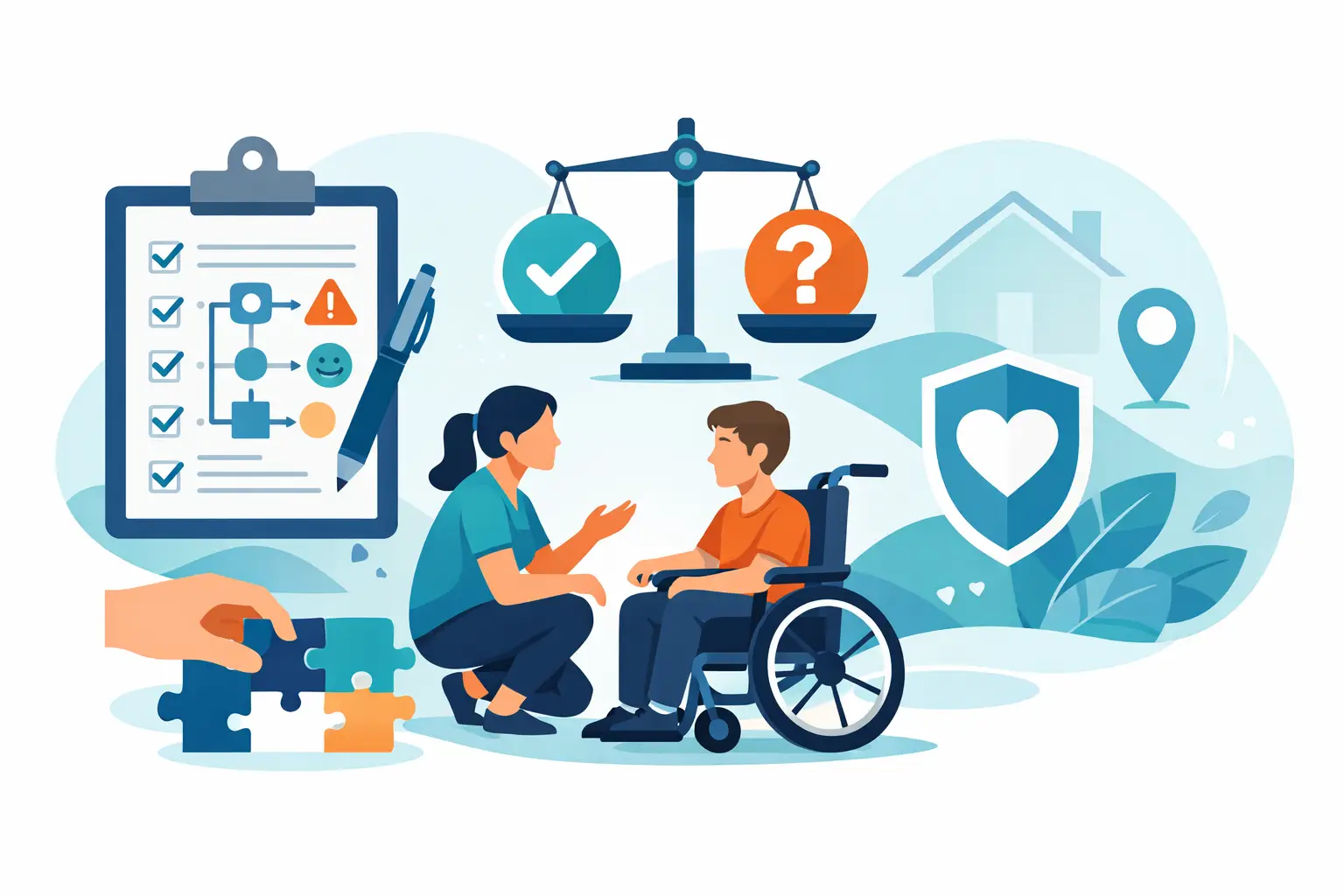
A behaviour plan can feel like another piece of paperwork when a person or family is already managing appointments, support workers, school concerns or difficult incidents at home. But the answer to “are behaviour plans mandatory” depends on the setting, the person’s needs and, most importantly, whether a restrictive practice is being used or considered.
For NDIS participants, a behaviour support plan is not automatically required simply because a person has a disability, receives support, or sometimes displays behaviours of concern. However, formal requirements apply in particular circumstances. Understanding the difference can help participants, families and providers seek the right support early, without treating every behaviour as a problem to be controlled.
Are behaviour plans mandatory under the NDIS?
Under the NDIS, behaviour support plans are mandatory when a regulated restrictive practice is used. They may also be strongly recommended when a person’s behaviour is placing them or others at risk, disrupting their everyday life, or making it hard for supports to be delivered safely and consistently.
A restrictive practice is an intervention that limits a person’s rights or freedom of movement to prevent harm. Under the NDIS framework, regulated restrictive practices include seclusion, chemical restraint, mechanical restraint, physical restraint and environmental restraint. Examples can range from locking food cupboards to prevent access, to using medication specifically to influence behaviour rather than treat a diagnosed health condition.
These practices are tightly regulated because they can have serious effects on a person’s dignity, autonomy and wellbeing. If a provider uses a regulated restrictive practice, it must be authorised in line with relevant state or territory requirements, reported to the NDIS Quality and Safeguards Commission, and included in a behaviour support plan developed by an appropriately qualified behaviour support practitioner.
The legal and procedural details can differ across Australia. In Queensland, service providers, families and support teams should take care to follow both NDIS obligations and any applicable state safeguards. A qualified practitioner can help clarify what applies to a person’s particular circumstances.
When a plan is helpful, even if it is not compulsory
A behaviour support plan is often valuable before a restrictive practice is ever considered. Positive Behaviour Support is not about making someone compliant or removing their personality. It is a person-centred approach that seeks to understand why a behaviour is happening and what changes will make life safer, more predictable and more meaningful for the person.
For example, a child may become distressed and throw objects during transitions because they do not understand what is happening next. An adult may leave a service unexpectedly because the environment is too noisy, a request feels overwhelming, or they are trying to communicate an unmet need. A plan can identify these patterns and give everyone involved practical, respectful ways to respond.
In these situations, a plan may include communication supports, predictable routines, sensory adjustments, choices, skill-building strategies and guidance for carers or support workers. It should focus on improving quality of life, not simply reducing an incident count.
A plan can be especially useful where several people support the participant. Parents, teachers, support coordinators, allied health professionals and disability support workers may all have good intentions, yet respond differently when stress is high. Clear, shared guidance reduces confusion and helps the person receive consistent support across home, school, community and services.
What a good behaviour support plan includes
The level of detail should match the person’s situation. A brief plan may be appropriate for emerging concerns, while a comprehensive behaviour support plan is generally needed where behaviours are complex, safety risks are higher, or restrictive practices are involved.
A quality plan begins with the person, not the behaviour. It considers their strengths, preferences, communication style, health, relationships, culture, daily routines and goals. It also looks carefully at what happens before and after an incident, rather than assuming the person is being difficult or deliberately challenging others.
A comprehensive plan commonly sets out the behaviours of concern in clear, non-judgemental language; possible triggers and unmet needs; proactive strategies that reduce distress; skills the person can be supported to develop; and safe responses when there is immediate risk. Where restrictive practices are in place, the plan must explain why they are being used, how their use will be reduced, and how they will be eliminated wherever possible.
It should also name who is responsible for putting strategies into practice and how the team will record, review and update information. A plan sitting in a folder does not protect anyone. It needs to be understood by the people providing day-to-day support.
Behaviour plans in schools, workplaces and family life
Outside the NDIS, the word “behaviour plan” is used in many ways. A school may develop an individual behaviour support plan for a student, while a workplace might use a performance or conduct plan. Families may create routines and response strategies at home with help from a psychologist, counsellor or allied health professional.
These plans are not universally mandatory. Schools and workplaces have their own policies, duty-of-care responsibilities and legal obligations, and a plan may be appropriate without being legally required. The key question is whether the plan is genuinely helping the person participate safely and fairly, rather than being used as a punitive document.
For children, it is particularly important to consider developmental stage, communication needs, sensory factors, learning differences, anxiety, sleep, pain and changes at home or school. Behaviour is often communication. A plan that overlooks the reason behind the behaviour can unintentionally make distress worse.
What to do if restrictive practices may be involved
Sometimes a family or provider does not realise that an everyday response could be considered restrictive. This can happen when strategies have developed gradually in response to genuine safety concerns. A locked gate, blocking access to a room, holding someone during distress, or giving medication to settle behaviour may feel necessary in the moment, but each situation needs careful assessment.
The first priority is immediate safety. If there is an urgent risk of harm, seek appropriate emergency assistance. Once the immediate situation is stable, raise the concern with the participant’s support team, support coordinator, nominee or treating health professionals. Do not wait for a serious incident to become routine.
A behaviour support practitioner can assess the circumstances, work with the person and their family or carers, and develop strategies that reduce reliance on restrictive responses. Providers also need to ensure workers are trained in the plan, understand incident reporting requirements and know when to seek further assistance.
Consent and participation matter throughout this process. The person should be involved in decisions in ways that suit their communication and decision-making needs. Families, guardians and other supporters may have an important role, but the participant’s rights, preferences and voice remain central.
Choosing the right support
If you are unsure whether a formal plan is needed, start by describing what is happening rather than trying to label it. Consider when the behaviour occurs, what tends to happen beforehand, who is affected, what has helped, and whether anyone’s safety or rights are being limited.
It can also help to bring together relevant information from support workers, schools, medical professionals and family members. Different perspectives often reveal patterns that are difficult to see in a single appointment. At the same time, avoid assuming that every account carries equal weight over the person’s own experience. Their communication, choices and observations should guide the process.
In Mind Therapy provides Positive Behaviour Support for NDIS participants and works with families and support teams to create practical, person-centred strategies. Support can be delivered in ways that suit the participant’s circumstances, including face-to-face appointments and telehealth where appropriate.
The right plan should leave a person with more choice, greater safety and better opportunities to take part in everyday life. If a current approach mainly relies on restriction, punishment or crisis management, it is a worthwhile time to ask what the person may be communicating and what support could make things easier before distress escalates.